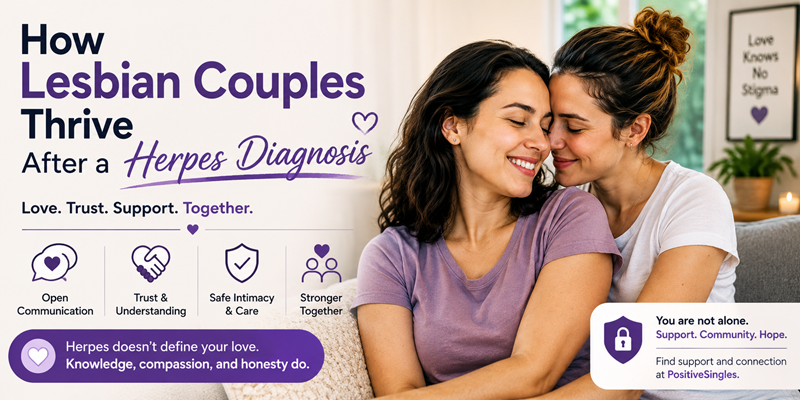
A herpes diagnosis can bring uncertainty into any relationship, including lesbian partnerships. Questions about intimacy, disclosure, plans, and emotional well-being often surface immediately after learning about the diagnosis. While these concerns are completely natural, they do not define what your relationship will become.
Many lesbian couples discover that navigating herpes together actually strengthens their relationship. Honest communication, mutual respect, and evidence-based medical information often replace fear with understanding. Instead of allowing herpes to become a barrier, couples frequently learn new ways to support one another and build even stronger emotional connections.
The reality is that herpes is a common and manageable medical condition. It does not determine your ability to experience love, maintain intimacy, or build a lasting partnership.
Understanding Herpes in Lesbian Relationships
Herpes simplex virus (HSV) affects millions of people worldwide and remains one of the most common viral infections.
According to the World Health Organization (WHO), an estimated 3.8 billion people under age 50 are living with HSV-1, while approximately 520 million people between ages 15 and 49 are living with HSV-2 worldwide. Many individuals never develop noticeable symptoms, meaning they may carry the virus without realizing it.
These numbers demonstrate one important fact:
You are far from alone.
For lesbian couples, herpes transmission may occur through:
- Skin-to-skin genital contact
- Oral sex
- Oral herpes transmission
- Sharing sex toys without proper cleaning or barrier protection
- Contact during an active outbreak
Although transmission between women may occur less frequently than in some other forms of sexual contact, healthcare professionals agree that it remains possible. Understanding these facts helps couples make informed decisions rather than relying on myths or misinformation.
Education is often the first step toward reducing anxiety.
Learning Together Creates Confidence
Instead of facing herpes alone, many couples decide to learn together.
Reading information from trusted medical organizations helps separate facts from common misconceptions. Reliable resources include the Centers for Disease Control and Prevention (CDC), the World Health Organization (WHO), the American Sexual Health Association (ASHA), and Mayo Clinic.
Learning about antiviral medication, outbreak management, and safer intimacy practices gives couples confidence in making decisions that work for their relationship.
Knowledge reduces uncertainty and replaces fear with understanding.
Emotional Support Makes a Difference
The emotional impact of a herpes diagnosis can sometimes feel more difficult than the physical symptoms.
A supportive partner can help reduce feelings of shame or anxiety by offering reassurance, patience, and understanding.
Healthy emotional support includes:
- Listening without judgment.
- Avoiding blame or guilt.
- Encouraging regular healthcare appointments.
- Celebrating progress instead of dwelling on setbacks.
- Supporting each other during stressful periods.
Feeling accepted by your partner strengthens emotional security and helps both people move forward together.
Maintaining a Healthy Intimate Relationship
Herpes does not mean intimacy has to end.
Many lesbian couples continue enjoying satisfying relationships by communicating openly and making thoughtful decisions together.
Helpful practices may include:
- Avoiding sexual contact during active outbreaks.
- Considering barrier protection during oral sex when appropriate.
- Cleaning shared sex toys thoroughly before use.
- Following a healthcare provider’s advice regarding antiviral medication.
- Respecting each other’s comfort levels and boundaries.
Physical intimacy is only one part of a healthy relationship. Emotional closeness, affection, trust, and shared experiences are equally important.
Managing Outbreaks as a Team
Outbreaks can happen, but they do not have to create distance between partners.
Many couples approach outbreaks as a shared challenge rather than an individual burden. Supporting each other during these periods often strengthens emotional bonds.
Simple lifestyle habits that may help reduce outbreaks include:
- Getting adequate sleep.
- Managing stress effectively.
- Eating a balanced diet.
- Staying physically active.
- Taking prescribed medication as directed.
Working together builds resilience and reinforces the idea that herpes is manageable.
Overcoming Herpes Stigma Together
Unfortunately, misconceptions about herpes continue to exist.
Many people worry more about judgment than the condition itself. However, herpes is extremely common and says nothing about someone’s character, values, or ability to build a loving relationship.
Instead of allowing stigma to influence your confidence, focus on reliable information and supportive relationships.
Confidence grows when couples choose education instead of fear and compassion instead of shame.
Dating After a Herpes Diagnosis
For single lesbian women, returning to dating may feel intimidating at first.
Many people worry about disclosure or fear rejection. However, successful relationships begin with honesty and mutual respect.
Helpful dating tips include:
- Build confidence before entering a new relationship.
- Share your diagnosis before becoming sexually intimate.
- Give your partner time to learn and ask questions.
- Remember that rejection happens in every type of dating and is not unique to herpes.
The right partner will appreciate your honesty and value you for who you are.
Expert Insight
“A herpes diagnosis should never define the future of a healthy relationship. Couples who educate themselves, communicate openly, and follow appropriate medical guidance often discover that HSV becomes only a small part of their lives rather than the center of it.”
— Dr. Emily Carter, MD
Board-Certified Obstetrician and Gynecologist
This reflects what healthcare providers see every day.
Couples who work together generally experience less fear, greater emotional security, and stronger communication than those who allow stigma to shape their relationship.
Finding Love with PositiveSingles
Dating can feel challenging after a herpes diagnosis, but it does not have to be.
PositiveSingles offers a welcoming community where lesbian women living with herpes and other STDs can connect with people who understand their experiences. Members can create private profiles, communicate securely, join community discussions, and build genuine relationships based on honesty, respect, and shared understanding.
Instead of focusing on stigma, PositiveSingles encourages confidence, acceptance, and meaningful connections that help members move forward with hope.
Final Thoughts
A herpes diagnosis does not define your relationship or determine your future together. Many lesbian couples discover that facing challenges together strengthens trust, communication, and emotional intimacy.
With accurate medical information, honest conversations, and mutual support, herpes becomes one manageable part of life instead of the center of it.
Love grows through understanding, compassion, and respect—not through perfection. Couples who support one another through every stage of life often build relationships that are stronger than ever.
Frequently Asked Questions
Can lesbian couples have healthy relationships if one partner has herpes?
Yes. Many lesbian couples maintain healthy, long-term relationships by communicating openly, following medical advice, and making informed decisions together.
Is herpes common among women?
Yes. According to the World Health Organization, HSV-1 and HSV-2 affect billions of people worldwide, and many individuals never experience noticeable symptoms.
Should I tell my partner about my herpes diagnosis?
Yes. Honest disclosure helps build trust, allows informed decisions, and creates a stronger foundation for the relationship.
Can herpes stop me from dating?
No. Herpes is a manageable condition, and many people build happy, lasting relationships after their diagnosis.
Where can lesbian women find support and understanding?
Communities such as PositiveSingles provide a safe, welcoming environment where lesbian women living with herpes can connect, share experiences, build friendships, and develop meaningful relationships with people who understand their journey.
Medical Disclaimer: This article is for educational purposes only and should not replace professional medical advice, diagnosis, or treatment. Always consult a qualified healthcare provider regarding your health and treatment options.
Sources: Centers for Disease Control and Prevention (CDC), World Health Organization (WHO), American Sexual Health Association (ASHA), and Mayo Clinic.