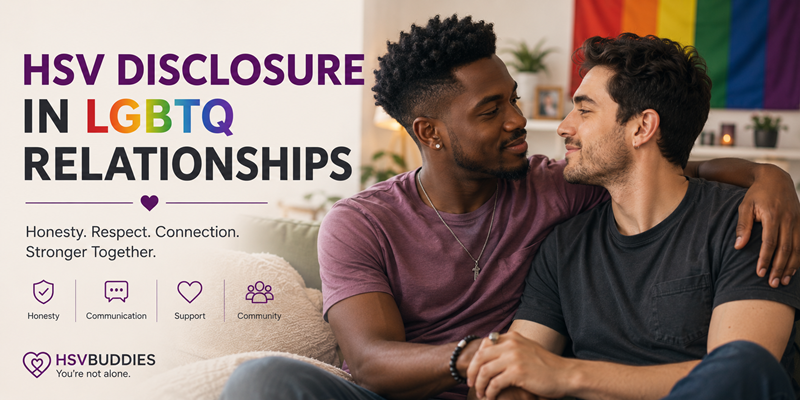
For many people in the LGBTQ+ Community, building a healthy relationship involves honesty, communication, trust, and emotional understanding. When someone is living with HSV, disclosure can become an important part of developing a meaningful connection. Talking about HSV may feel uncomfortable at first, but an open and respectful conversation can help partners make informed decisions and build stronger relationships.
HSV disclosure is not simply about sharing a health status. It can also create an opportunity for partners to discuss boundaries, protection, testing, intimacy, and emotional expectations. Whether someone is newly dating, entering a serious relationship, or exploring LGBTQ+ dating after a diagnosis, thoughtful communication can make the experience more manageable.
Understanding HSV Within LGBTQ+ Relationships
Herpes simplex virus can affect people of all sexual orientations and gender identities. HSV-1 and HSV-2 can both be transmitted through intimate skin-to-skin contact, and symptoms can vary significantly from one person to another. Some people experience noticeable outbreaks, while others may have mild or no obvious symptoms.
For LGBTQ+ couples, conversations about HSV may intersect with different forms of intimacy and sexual health practices. Partners may have different levels of knowledge about HSV, which makes education an important part of disclosure. Learning accurate information together can reduce unnecessary fear and help both people approach the subject with greater confidence.
Why Disclosure Matters
Disclosure allows a partner to understand the situation before becoming physically intimate. It allows both people to discuss ways to reduce transmission risk and decide what feels comfortable for them.
For someone living with HSV, disclosure can also reduce the emotional pressure of keeping an important piece of health information private. Honest communication can establish a foundation of trust and demonstrate that both partners’ well-being matters.
The Emotional Side of HSV Disclosure
One of the biggest challenges associated with disclosure is the fear of rejection. Someone may worry that a potential partner will misunderstand HSV or view the diagnosis negatively. These concerns can make dating feel stressful, especially after a recent diagnosis.
However, a diagnosis does not determine someone’s attractiveness, personality, value, or ability to have a loving relationship. A person living with HSV can have fulfilling romantic and intimate relationships. The quality of communication between partners often matters much more than the diagnosis itself.
Managing Fear and Uncertainty
Feeling nervous before disclosure is completely understandable. Taking time to learn about HSV can help someone feel more prepared for the conversation. It can also help to remember that disclosure is a two-way conversation rather than a presentation where one person must provide every possible answer.
A partner may have questions about transmission, outbreaks, protection, or testing. Responding honestly while acknowledging what you do not know can create a more comfortable discussion. Reliable sexual-health resources can also help couples find accurate information together.
How HSV Disclosure Can Strengthen Trust
Honest disclosure can sometimes strengthen an LGBTQ+ relationship because it demonstrates openness and respect. Sharing personal health information requires vulnerability, and responding with empathy can deepen emotional connection between partners.
A healthy conversation should give both people room to express their feelings. One person may need time to process the information, while another may immediately want to ask questions. Allowing that space can prevent the conversation from becoming unnecessarily emotional or confrontational.
Communication Builds Relationship Confidence
Strong communication is especially valuable when discussing sexual health. Partners can talk about their expectations, comfort levels, and boundaries without assuming that either person already knows what the other wants.
For people navigating LGBTQ+ relationships, HSV disclosure can become part of a broader conversation about mutual care. Talking openly about sexual health, testing, protection, and consent can help couples make decisions together rather than leaving one partner responsible for everything.
HSV Disclosure and Different Types of LGBTQ+ Relationships
Every relationship is different, and there is no single disclosure experience that works for everyone. A new dating connection may require a different conversation than a long-term partnership.
People exploring LGBTQ+ Dating may choose to discuss HSV before becoming physically intimate. Others may first build emotional trust before discussing more personal health information. The important point is that disclosure should happen before intimate contact that could potentially transmit HSV, giving both people an opportunity to make informed decisions.
In established relationships, HSV disclosure may lead to conversations about managing outbreaks, discussing symptoms, and maintaining comfortable forms of intimacy. Partners can work together to understand risk and establish boundaries that suit their relationship.
Talking About HSV With a Potential Partner
Choosing the right moment can make disclosure easier. A private and calm environment can provide enough space for an honest conversation without unnecessary pressure.
Someone can begin by explaining that they want to share something related to their sexual health. The conversation can then move toward the diagnosis, what the person understands about their HSV status, and what precautions they take.
Keep the Conversation Honest and Respectful
There is no need to overwhelm a partner with complicated medical information. Clear and straightforward communication is usually more helpful.
A disclosure conversation might include information about whether the person has HSV-1 or HSV-2, whether outbreaks occur, and what steps are taken to reduce transmission. Partners can then discuss questions and concerns openly.
Consent should remain central to the conversation. Both people have the right to make their own decisions about intimacy, and those decisions should be respected without pressure or guilt.
Reducing Stigma Through Better Communication
HSV stigma can sometimes create more emotional distress than the condition itself. Misconceptions about herpes may lead people to believe that an HSV diagnosis makes relationships impossible. Education and honest conversations can challenge those assumptions.
Within LGBTQ+ sexual health, creating supportive conversations about HSV can encourage people to view sexual health as a normal part of responsible relationships. Partners can discuss health information without shame while recognizing that everyone’s circumstances are different.
Community support can also make disclosure easier. Talking with trusted friends, counselors, healthcare professionals, or supportive communities may help someone process their emotions before discussing HSV with a partner.
HSV Disclosure, Dating, and Long-Term Relationships
HSV does not prevent someone from developing a committed relationship. People living with herpes can date, fall in love, build partnerships, and create fulfilling lives.
For individuals exploring dating with HSV, confidence often develops through knowledge and experience. Learning how to communicate clearly can make future conversations easier. A respectful partner may appreciate the honesty involved in disclosure and recognize it as a sign of responsibility.
In long-term relationships, couples can continue discussing sexual health as circumstances change. Outbreak patterns, treatments, protection preferences, and relationship boundaries may evolve. Maintaining open communication can help couples adapt together.
Creating a Supportive Relationship Environment
A supportive relationship does not require either partner to ignore their concerns. Instead, it creates space for questions, honest answers, boundaries, and mutual respect.
People navigating HSV relationships can benefit from treating the diagnosis as one aspect of their health rather than allowing it to define the entire relationship. Emotional compatibility, kindness, communication, shared goals, and respect remain important parts of a strong partnership.
Partners should also remember that disclosure does not guarantee a particular response. Someone may need time to process the information, and that response should not automatically be interpreted as a judgment of the person sharing it.
FAQs About HSV Disclosure and LGBTQ+ Relationships
Is HSV disclosure necessary before intimacy?
Disclosure before intimate contact that could potentially transmit HSV is an important part of informed consent. It allows a partner to understand potential risks and make a personal decision about intimacy.
Can someone with HSV have a healthy LGBTQ+ relationship?
Yes. HSV does not prevent people from having loving, committed, and fulfilling relationships. Open communication, mutual respect, consent, and appropriate health information can support healthy partnerships.
What should I say when disclosing HSV?
Keep the conversation honest and straightforward. Explain your HSV status, share what you know about transmission and prevention, and allow your partner to ask questions. You do not need to have every medical answer yourself.
Can HSV disclosure lead to rejection?
It is possible that a person may decide they are not comfortable with the potential transmission risk. However, rejection does not mean that someone living with HSV is undesirable or incapable of finding love. Different people make different decisions about their health and relationships.
How can couples reduce HSV transmission risk?
Partners can discuss safer-sex practices, recognize symptoms, avoid intimate contact during outbreaks, and speak with a healthcare professional about available prevention and treatment options. The appropriate approach can vary between individuals.
Does HSV affect LGBTQ+ sexual health differently?
HSV can affect people across all orientations and identities. However, different couples may have different types of intimacy and sexual-health considerations. Communication with a healthcare professional can help partners understand risks relevant to their relationship.
Where can someone find emotional support after an HSV diagnosis?
Support may come from trusted friends, healthcare professionals, counselors, or supportive communities. Finding people who provide accurate information and avoid stigma can make the emotional side of HSV easier to manage.
Conclusion
HSV disclosure can shape LGBTQ+ Relationships in meaningful ways because it brings communication, trust, consent, and sexual health into the conversation. While disclosure may feel intimidating, approaching it with honesty and compassion can create a stronger foundation for connection.
For people navigating herpes dating, the goal is not to find a perfect conversation or guarantee a particular reaction. The goal is to communicate respectfully, provide accurate information, respect boundaries, and allow both partners to make informed choices. With understanding and open communication, HSV can become one part of a relationship rather than the definition of it.