Last Updated July 2026
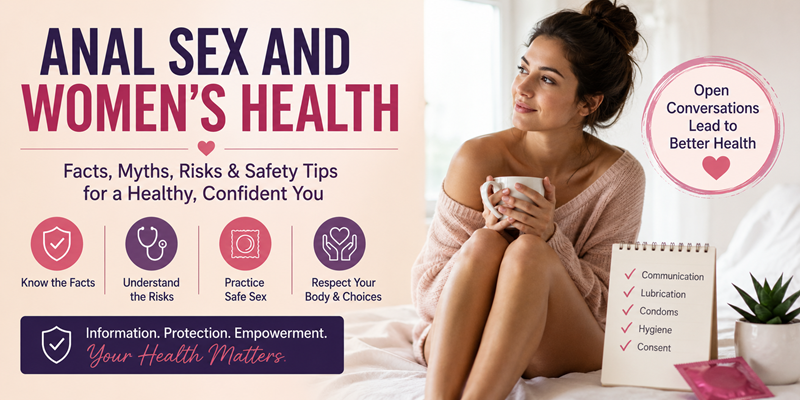
Talking openly about sexual health helps people make informed decisions and build healthier relationships. Yet, anal sex and women’s health remain topics surrounded by myths and misinformation. Understanding the facts can help reduce unnecessary anxiety.
This guide provides medically accurate, judgment-free information about anal sex and women’s health, including common myths, real risks, safety tips, and how to make informed choices. Whether you’re considering it for the first time or simply want reliable information, understanding the facts empowers you to protect your body and your well-being.
Whether you’re exploring this topic for the first time or looking for reliable health information, understanding the facts is the best place to start.
Understanding Anal Sex and Women’s Health
The anus and rectum differ from the vagina in several important ways. Unlike the vagina, the anus does not produce natural lubrication, and its lining is thinner and more delicate. This means friction during penetration can cause small tears if adequate lubrication is not used.
These differences do not mean anal sex is inherently unsafe, but they do make proper preparation essential. Healthcare professionals recommend using plenty of lubricant, communicating with your partner, and practicing safer sex to reduce the risk of injury and sexually transmitted infections (STIs).
Education and communication are key to making informed decisions about your sexual health.
Common Myths About Anal Sex
Anal Sex Is Always Painful
Pain should not be considered a normal part of anal sex. Discomfort often results from rushing, inadequate lubrication, anxiety, or lack of relaxation. Taking things slowly, communicating throughout the experience, and stopping if pain occurs can improve comfort and reduce the chance of injury.
Anal Sex Does Not Require Protection
This is one of the most dangerous misconceptions. The tissues inside the rectum are more susceptible to tiny tears, making it easier for viruses and bacteria to spread during unprotected anal sex.
Using condoms significantly reduces the risk of many sexually transmitted infections, including HIV, herpes, gonorrhea, and chlamydia.
Anal Sex Causes Permanent Damage
Healthy adults who practice anal sex safely are unlikely to experience permanent damage. However, rough penetration, repeated injury, or ignoring pain can lead to problems such as anal fissures or irritation of existing hemorrhoids.
Pregnancy Is Impossible
Anal sex alone cannot result in pregnancy. However, if semen comes into contact with the vaginal opening, pregnancy is still possible. Couples who wish to prevent pregnancy should continue using reliable contraception.
Potential Health Risks
Understanding the possible health risks allows you to make informed choices and reduce complications.
Increased Risk of Sexually Transmitted Infections
Anal intercourse carries a higher risk of transmitting sexually transmitted infections because the rectal lining is delicate and can develop microscopic tears.
Conditions that may spread through anal sex include:
- Herpes (HSV)
- HIV
- Human papillomavirus (HPV)
- Gonorrhea
- Chlamydia
- Syphilis
- Hepatitis B
Using condoms consistently helps lower these risks but does not eliminate them.
Anal Fissures
Small tears in the anal tissue, known as fissures, may develop if penetration is forceful or lubrication is insufficient. Symptoms may include pain, minor bleeding, or discomfort during bowel movements.
Hemorrhoid Irritation
People with hemorrhoids may experience increased irritation or discomfort after anal intercourse. If hemorrhoids are painful or bleeding, postponing anal sex until symptoms improve is recommended.
Bacterial Infections
Bacteria naturally found in the rectum can enter the vagina if proper hygiene is not followed. Switching directly from anal sex to vaginal sex without changing condoms or cleaning thoroughly increases the risk of urinary tract infections (UTIs) and bacterial vaginosis.
How to Practice Safer Anal Sex
Use Plenty of Lubricant
Since the anus does not produce natural lubrication, using a generous amount of water-based or silicone-based lubricant reduces friction and helps protect delicate tissues.
Reapply lubricant whenever necessary to maintain comfort throughout the experience.
Always Use Condoms
Condoms remain one of the most effective ways to reduce the transmission of sexually transmitted infections.
If switching from anal sex to vaginal sex, use a new condom to help prevent the transfer of bacteria.
Communicate With Your Partner
Honest communication helps both partners understand boundaries, comfort levels, and expectations. Consent should always be enthusiastic, ongoing, and respected throughout the experience.
Practice Good Hygiene
Wash hands before and after sexual activity, clean reusable sex toys according to the manufacturer’s instructions, and avoid sharing toys without proper cleaning or protection.
Simple hygiene habits help reduce the spread of bacteria and infections.
Stop If Something Doesn’t Feel Right
Mild pressure may occur initially, but severe pain, heavy bleeding, or persistent discomfort should never be ignored. If symptoms continue after sexual activity, consult a qualified healthcare professional.
When Should Women Avoid Anal Sex?
It may be best to postpone anal sex if you have:
- Active hemorrhoids
- Anal fissures
- Rectal bleeding
- Recent colorectal surgery
- Severe constipation
- An untreated sexually transmitted infection
- An active herpes outbreak involving the anal or genital area
Waiting until symptoms have resolved can help reduce discomfort and lower the risk of complications.
HSV and Anal Sex
For people living with herpes simplex virus (HSV), extra precautions are important. HSV can spread through skin-to-skin contact, including during anal intercourse. The risk of transmission is highest during an active outbreak, although asymptomatic viral shedding can also occur.
Avoid sexual contact when sores, blisters, or other symptoms are present. Daily suppressive antiviral medication, condom use, and honest communication with partners can help reduce the likelihood of transmission.
Living with HSV should never prevent someone from enjoying healthy relationships. Many people build meaningful connections through supportive communities where honesty and understanding are encouraged.
Emotional Health and Healthy Relationships
Sexual health includes emotional well-being as well as physical health. Every sexual experience should involve mutual respect, clear communication, and informed consent.
No one should ever feel pressured into trying a sexual activity they are uncomfortable with. Healthy relationships are built on trust, respect, and the freedom to communicate openly about personal boundaries.
If you’re living with HSV and looking for supportive relationships, HSVBuddies offers a welcoming community where members can connect with people who understand their experiences. Open communication and shared understanding often make dating more comfortable and less stressful.
Final Thoughts
Understanding anal sex and women’s health helps replace myths with reliable, evidence-based information. While anal sex carries certain health risks, many of these can be reduced through proper preparation, good hygiene, lubrication, condom use, and honest communication.
Everyone deserves accurate sexual health information that supports informed decisions without judgment. By respecting your body, listening to your comfort level, and following safer sex practices, you can protect both your physical and emotional well-being.
Frequently Asked Questions
Is anal sex safe for women?
Anal sex can be practiced more safely when there is mutual consent, plenty of lubricant, proper hygiene, and consistent condom use. It still carries a higher risk of STI transmission than vaginal sex.
Does anal sex increase the risk of herpes transmission?
Yes. HSV can spread during anal intercourse through skin-to-skin contact, especially during an active outbreak. Avoid sexual activity when symptoms are present and use condoms to help reduce the risk.
Can anal sex cause urinary tract infections?
It can increase the risk if bacteria from the rectum are transferred to the urinary tract or vagina. Changing condoms and practicing good hygiene help reduce this risk.
Is bleeding after anal sex normal?
A small amount of spotting may occur if tissue becomes irritated, but persistent or heavy bleeding is not normal. Consult a qualified healthcare professional if bleeding continues or is accompanied by severe pain.
What type of lubricant is best for anal sex?
Water-based and silicone-based lubricants are commonly recommended because they reduce friction and improve comfort. Avoid products that may irritate sensitive tissues or damage condoms.
Additional Resources
-
Planned Parenthood: Sexual health guides
-
Scarleteen: Inclusive sex education for teens and young adults
-
CDC STI Resources: STI statistics and prevention
-
Come As You Are by Emily Nagoski: Science-based sexual wellness guide
-
The Joy of Sex: Includes information on anatomy and safer sex techniques
Medical Disclaimer: This article is for informational purposes only and does not constitute medical advice, diagnosis, or treatment. Always consult a qualified healthcare professional before making decisions about your sexual health or treatment.