Last Updated August 2026
Dating with HPV can bring questions about disclosure, rejection, intimacy, and relationships. For Christian singles, there may also be questions about how faith, personal values, and sexual health fit together.
An HPV diagnosis does not erase a person’s dignity or ability to build a loving relationship. Christian HPV dating can involve honesty, compassion, responsible health decisions, and respect for personal boundaries.
Whether you are dating after an HPV diagnosis or supporting someone with HPV, accurate information can make difficult conversations easier.
Christian Values and HPV Dating
Christian communities include different denominations, cultures, traditions, and personal beliefs. There is no single Christian approach to dating.
Some singles may date with marriage as their goal. Others may be rebuilding their lives after divorce, widowhood, or previous relationships. Younger adults may be navigating their first serious relationship, while older singles may be looking for companionship or a second marriage.
Christian HPV singles can approach dating according to their personal convictions while also making responsible decisions about sexual health.
Values such as honesty, kindness, respect, and accountability can support healthier relationships.
How Christian HPV Dating Sites Are Changing Lives
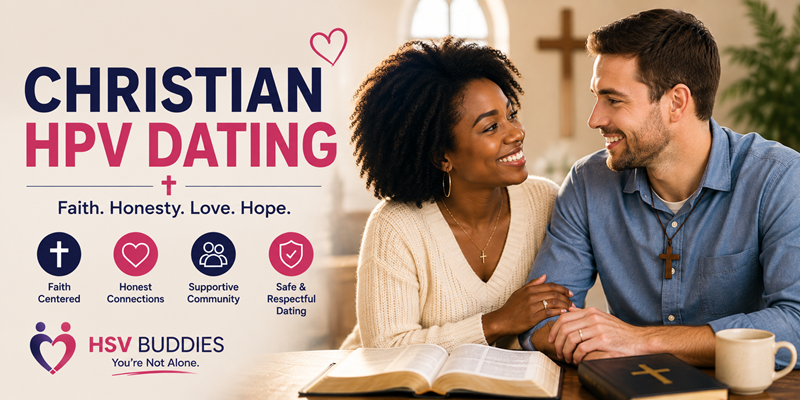
The rise of Christian-focused HPV dating platforms has revolutionized how believers with this diagnosis find love. These sites cater specifically to people living with HPV and other STDs who want to maintain a Christ-centred lifestyle. They provide a safe, stigma-free space where users can meet others who share their spiritual values and health experiences.
These platforms aren’t just about dating—they foster real communities. Features like prayer groups, scripture sharing, and forums encourage deeper connections beyond romantic interest. For many users, it’s comforting to know that they’re not alone. These Christian HPV dating sites help singles rediscover self-worth and hope in God’s timing for their love lives.
Why HPV Disclosure Can Feel Difficult
Talking about HPV with a potential partner can be emotionally challenging.
A systematic review published in BMJ Sexual & Reproductive Health examined 13 studies about disclosure of high-risk cervical HPV. Researchers identified concerns involving stigma, possible rejection, uncertainty about a partner’s reaction, and questions about when and how disclosure should occur. In one quantitative study included in the review, 60% of HPV-positive women considered disclosure risky.
These findings do not mean everyone with HPV experiences the same emotions. They show why disclosure can feel difficult and why supportive communication matters.
For Christian singles, the conversation may also involve faith, marriage, intimacy, and personal values.
Honesty does not have to mean shame.
How to Talk About HPV With a Christian Partner
Choose a private, calm setting where both people have enough time to talk.
Explain what you know about your diagnosis and what your healthcare professional has recommended. Avoid presenting uncertain information as fact.
You might say:
“I want to share something important about my health because I respect you and want our relationship to be honest. I have been diagnosed with HPV. HPV is very common, and I am following appropriate medical guidance. I understand you may have questions, and I want us to have an open conversation.”
You can adapt this wording to your faith, personality, and relationship.
The purpose is not to ask for forgiveness for having a virus. It is to provide relevant health information so both people can make informed decisions.
HPV and Christian Marriage
An HPV diagnosis does not automatically prevent marriage.
Couples may encounter many health challenges during a relationship. What matters is how partners communicate, support each other, and make responsible decisions.
If HPV becomes part of a serious relationship, couples can discuss vaccination, screening, prevention, intimacy, and other health questions with qualified healthcare professionals.
Trust grows when partners can discuss difficult subjects without humiliation or pressure.
Christian HPV Dating After Rejection
Not everyone will respond positively to an HPV disclosure.
Some people may need time to understand the condition. Others may decide they are not comfortable continuing a relationship.
Rejection can hurt, particularly when someone already feels ashamed about a diagnosis.
Try not to interpret another person’s decision as a measurement of your worth.
People have different boundaries and health concerns. A respectful partner may be willing to learn, communicate, and make decisions based on accurate information.
Christian Singles Have Diverse Dating Goals
Christian HPV singles are not one uniform group.
Some may be in their 20s and looking for a future spouse. Others may be dating in their 30s or 40s after previous relationships. Singles over 50 may be looking for companionship or marriage.
Christian singles also have diverse cultural backgrounds, denominations, personalities, and relationship expectations.
Some are heterosexual, while LGBTQ+ Christians may have their own experiences of faith, identity, and relationships.
A supportive HPV dating community should recognize these differences rather than assuming every Christian has the same beliefs.
Finding Supportive Christian HPV Connections
Christian singles living with HPV may prefer to connect with people who understand both their health experience and their values.
An HPV-focused dating community can provide an opportunity to meet people who already understand the emotional challenges associated with disclosure.
However, HPV should not be the only compatibility factor.
Consider shared values, location, age, personality, interests, communication style, faith practices, and relationship expectations.
A strong relationship is built around the whole person.
Frequently Asked Questions
Can Christians date after an HPV diagnosis?
Yes. HPV does not prevent someone from dating, forming relationships, or getting married.
Does HPV mean I have done something wrong?
No. HPV is a common viral infection and should not be treated as a measurement of someone’s character or morality.
Should I tell a Christian dating partner about HPV?
Your circumstances matter. If you have an HPV-related condition or abnormal screening result, discuss your situation with a healthcare professional and ask what information is appropriate to share.
How can I disclose HPV respectfully?
Choose a private setting, explain your diagnosis honestly, provide accurate information, and give your partner time to ask questions.
Can HPV affect men?
Yes. Certain HPV infections can contribute to penile, anal, and oropharyngeal cancers.
Can HPV vaccination prevent cancer?
Yes. The CDC states that HPV vaccination can prevent more than 90% of cancers caused by HPV.
Can HPV go away?
Most HPV infections go away naturally within two years. Some persistent infections can cause health problems, so recommended medical follow-up remains important.
Can I find Christian singles with HPV online?
HPV-focused dating communities can help people connect with others who understand the experience. Compatibility should still include shared values, communication, faith, relationship goals, and personal interests.
Final Thoughts
Christian HPV dating does not have to be defined by fear or shame.
An HPV diagnosis is a health issue, not a complete description of who you are.
For Christian singles, dating after HPV can involve faith, honesty, compassion, responsibility, and respect. Reliable medical information can replace misconceptions, while thoughtful communication can make disclosure less intimidating.
Whether you hope to find marriage, companionship, friendship, or a meaningful relationship, you deserve to be treated with dignity.
Take care of your health, communicate honestly, protect your privacy, and allow relationships to develop naturally.
The right connection will be based on the whole person, not a diagnosis.
Medical Disclaimer
This article is for general educational purposes and does not replace professional medical advice, diagnosis, treatment, vaccination, or sexual-health counselling. Consult a qualified healthcare professional for HPV testing, screening, symptoms, treatment, and personal guidance.