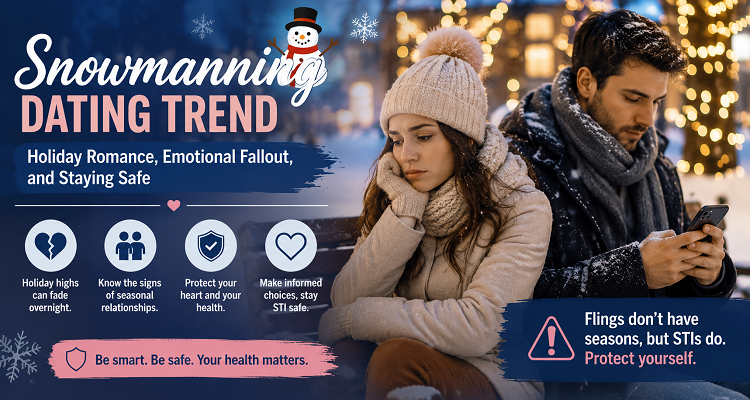
Snowmanning Dating Trend: Holiday Romance and STI Safety Tips
Last updated July 2026
The holiday season is often associated with celebrations, family gatherings, cosy evenings, and new romantic connections. While many relationships that begin during this time grow into meaningful partnerships, others are short-lived. One dating behavior that has gained attention is the snowmanning dating trend—a pattern where someone appears highly interested during the holiday season, only to disappear once the festivities are over.
Although seasonal dating trends can be emotionally challenging, they also raise important conversations about sexual health, communication, and personal boundaries. Whether you’re dating online or meeting someone in person, understanding these behaviors can help you make informed decisions and protect both your emotional and physical well-being.
What Is the Snowmanning Dating Trend?
Snowmanning describes a situation where someone actively pursues a romantic relationship during the colder months or holiday season but gradually loses interest once the season ends.
Unlike a long-term commitment, these relationships often move quickly because people may feel lonely during the holidays or want companionship for seasonal events. Once everyday routines return, communication may decrease or stop altogether.
While not everyone who dates during the holidays has temporary intentions, recognizing this trend can help you identify whether your relationship is developing naturally or simply filling a seasonal emotional need.
Why Holiday Dating Feels Different
Several factors contribute to increased dating activity during the holiday season.
The atmosphere naturally encourages togetherness. Social events, celebrations, vacations, and family gatherings often remind people of the value of companionship.
Cold weather also means more indoor activities, creating opportunities for conversations, shared meals, and movie nights.
Dating apps and online communities frequently experience higher activity during this period because many singles become more motivated to meet new people before the new year begins.
These circumstances can create genuine relationships—but they can also encourage people who are simply looking for temporary companionship.
Recognizing the Signs
Not every fast-moving relationship is unhealthy, but certain behaviors may indicate that someone is more interested in the season than in building a lasting connection.
Common signs include:
Everything Moves Very Quickly
They immediately begin making future holiday plans despite barely knowing you.
Communication Changes After the Holidays
Frequent messages suddenly become infrequent once holiday celebrations end.
Limited Interest Beyond Seasonal Activities
The relationship revolves around parties, gift exchanges, or holiday events rather than learning about each other’s goals and values.
Avoiding Long-Term Conversations
They avoid discussing plans after the holidays or become vague when talking about the months ahead.
These behaviours don’t automatically mean someone has bad intentions, but they are worth noticing.
Emotional Effects of Seasonal Dating
Short-term relationships can leave lasting emotional effects.
Many people invest genuine feelings into holiday romances, making it difficult when communication suddenly stops.
Common reactions include disappointment, confusion, lowered confidence, and questioning personal worth.
It’s important to remember that another person’s behavior often reflects their own readiness for commitment—not your value.
Healthy relationships develop through consistency, honesty, and mutual effort throughout the year.
Casual Dating and Sexual Health
Holiday celebrations sometimes involve travel, parties, alcohol, and spontaneous decisions.
For some people, this increases the likelihood of casual sexual encounters.
Whenever intimacy is involved, sexual health deserves equal attention.
Common sexually transmitted infections include herpes (HSV-1 and HSV-2), HPV, chlamydia, gonorrhea, syphilis, and HIV.
Many STIs may not cause noticeable symptoms immediately, making regular testing and honest communication important for sexually active adults.
Reducing Your Risk
Protecting your sexual health doesn’t mean avoiding dating—it means making informed choices.
Talk openly about sexual health before becoming intimate.
Use protection consistently, recognizing that condoms reduce—but do not eliminate—the risk of skin-to-skin transmitted infections such as herpes and HPV.
Avoid sexual contact during visible outbreaks if either partner has herpes.
If you’ve had multiple partners or believe you’ve been exposed to an STI, schedule regular screenings with a healthcare provider.
Knowledge helps both partners make informed decisions.
The Importance of Honest Communication
Open communication creates stronger relationships regardless of how long they last.
Discuss expectations early.
Ask questions like:
- What are you looking for?
- Are you interested in a serious relationship?
- How do you feel about exclusivity?
- Have you recently been tested for STIs?
These conversations may feel uncomfortable initially, but they demonstrate maturity and respect.
Someone who values you will appreciate honest communication.
Dating with Herpes During the Holidays
If you’re living with herpes, holiday dating may bring additional anxiety.
You may wonder when to disclose your status or worry that seasonal relationships make disclosure more difficult.
The truth is that many people living with herpes enjoy healthy, successful relationships every day.
Choose a private, relaxed moment before becoming intimate to discuss your status.
Be honest, share factual information, and answer questions calmly.
Many people discover that openness strengthens trust and helps identify partners who value honesty.
Your diagnosis does not define your ability to experience love or meaningful relationships.
Build Relationships That Last Beyond the Holidays
Healthy relationships continue after decorations are packed away.
Look for partners who demonstrate consistency rather than intensity.
Notice whether they remain engaged after vacations end and daily routines return.
Ask yourself:
Do they make time for me?
Do they communicate regularly?
Can we solve disagreements respectfully?
Do our values align?
Long-term compatibility depends on shared values, trust, communication, and emotional support—not simply romantic excitement.
Frequently Asked Questions
Is snowmanning a real dating trend?
It’s an informal term describing seasonal dating behaviour where someone shows strong romantic interest during the holidays but becomes distant afterwards.
Does holiday dating always lead to disappointment?
No. Many successful relationships begin during the holiday season. The key is evaluating consistency rather than excitement alone.
Should I discuss STI testing before intimacy?
Yes. Honest conversations about sexual health help both partners make informed decisions and build trust.
Can people with herpes have successful relationships?
Absolutely. Millions of people living with herpes have fulfilling long-term relationships. Honest communication and appropriate precautions help reduce transmission risk.
Final Thoughts
Holiday romance can be exciting, meaningful, and full of possibilities. However, it’s important to balance emotion with thoughtful decision-making.
Understanding dating trends like snowmanning reminds us to look beyond seasonal excitement and focus on consistency, honesty, and mutual respect. Protecting your emotional well-being and sexual health should always remain a priority, regardless of the season.
Whether you’re beginning a new relationship or navigating dating with herpes, confidence, communication, and informed choices will help you build stronger connections.
If you’re looking for a supportive community of people who understand life with herpes, HSVBuddies offers a welcoming space to connect, share experiences, and build meaningful relationships with confidence.