
In recent years, sexually transmitted infections (STIs) among young people ages 18-24 have reached a record high. As you can imagine, more people with STIs means more conversations. Individuals inflicted with STIs can live everyday lives with medication, regular testing, and the support of loved ones around them.
If you are currently dating with an STD or know someone who has one, you may understand how stressful and nerve-wracking it can be to put yourself out there with relationships. However, it doesn’t have to be hard to communicate about your condition with a new potential partner if you know how to discuss it properly.
Understanding STIs and Modern Dating
Sexually transmitted infections are more common than many people realize. According to global health organizations, millions of people worldwide live with conditions such as herpes, HPV, HIV, chlamydia, and other STIs. Despite their prevalence, stigma and misinformation often make discussions about sexual health feel uncomfortable.
In reality, many people with STIs build fulfilling relationships and maintain healthy dating lives. Advances in medical treatments, increased awareness, and improved access to testing have made it easier for individuals to manage their sexual health responsibly.
Dating with an STI does not mean limiting your chances of finding love. Instead, it encourages honest communication and mutual respect between partners.
When to Break the News
It may feel like there is no right time to tell your partner you have an STI. You may even feel anxious and worried that your partner won’t look at you the same after telling them.
You should tell your partner before your first sexual experience together. With this information in mind, you also want to tell your partner when you feel comfortable, safe, and accepted. Ensure you are in a secure environment and allow your partner to listen to your feelings.
How to Have Safer Sex
After discussing your STI status with your partner, ensure both the safety of that person and yourself during intimacy. Being responsible and using protection will be worthwhile in the long run. There is no method of sexual protection that is 100% safe, but there are steps that you can take to avoid transmission of the STI.
- Wear protection: Male and female condoms and latex contraceptives help prevent the spread of countless STIs. As many STIs are spread through genital fluids, condoms may reduce the chances of cross-contamination.
- Get tested: If you suspect you have an STI or have engaged in sexual behavior with someone who has tested positive for STIs, it is an intelligent decision to get tested. Some conditions can become dangerous if left untreated.
- Be honest: Be open and communicative with your partner about your sexual history and your partners with STIs. This will limit any future issues and dishonesty. You will feel like a weight has been lifted off your chest when you come clean about your condition.
What if My Partner Has an STI?
These days, STIs have become extremely common in the young dating pool, and unfortunately, a person you have come in contact with has likely had experiences with STIs. Whether they have had a previous relationship partner with an STI or have had an STI scare themselves, it is nothing out of the ordinary.
If your partner opens up about their diagnosis, it is essential to stay calm and collected despite the emotions you may be feeling. They are probably very vulnerable in opening up to you about their condition. While you may feel uneasy at first, keep the things in mind about that person that drew you toward them in the first place.
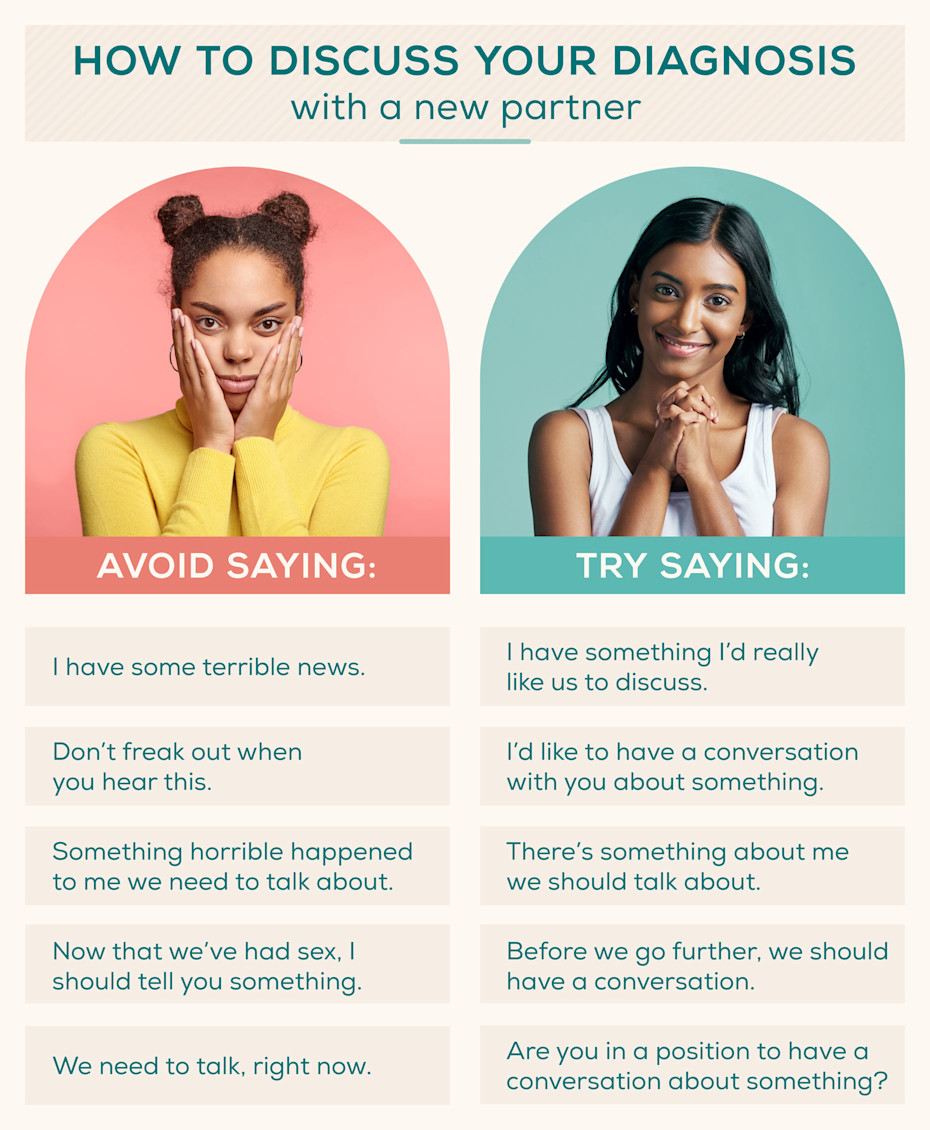
How to Start the Conversation
Starting a conversation about STIs can feel intimidating, but keeping the tone calm and respectful can help make the discussion easier.
You might begin by expressing your commitment to honesty and mutual health. For example, you could say that you believe open communication about sexual health is important in any relationship.
Approaching the discussion as part of a broader conversation about health and safety can help normalize the topic. Many couples find it helpful to discuss testing, boundaries, and expectations together.
When framed as a shared responsibility, the conversation feels less like a confession and more like a responsible step toward building trust.
Addressing Common Concerns
When discussing STIs in dating, certain concerns often arise. Being prepared to address these topics can help the conversation move smoothly.
Transmission Risk
Many people worry about how easily an STI can be transmitted. Explaining preventive measures—such as protective practices or medical treatments—can help reduce anxiety.
Long-Term Health
Partners may ask about how the condition affects overall health. Providing factual information can help clarify misconceptions.
Emotional Impact
Some individuals may feel unsure about navigating a relationship involving an STI. Honest conversations about feelings and expectations can help both partners feel more comfortable.
Handling Reactions with Confidence
People respond to sensitive information in different ways. Some partners may be supportive and understanding immediately, while others may need time to think about the situation.
If someone reacts with uncertainty or hesitation, try to remain calm and respectful. Their response often reflects a need for more information rather than rejection.
In some cases, a person may decide not to continue the relationship. While this can be disappointing, it is important to remember that compatibility involves many factors beyond health status.
The right partner will appreciate your honesty and willingness to communicate openly.
Maintaining Confidence in Your Dating Journey
Living with an STI may change how you approach certain conversations, but it does not prevent you from building meaningful relationships. Many people find that discussing sexual health openly leads to more honest and respectful connections.
Focus on qualities that truly matter in relationships, such as:
-
Kindness and empathy
-
Emotional compatibility
-
Shared interests and goals
-
Mutual respect and communication
These qualities ultimately determine the strength of a relationship far more than any medical condition.
Final Thoughts
Dating with an STI may require thoughtful communication, but it can also create opportunities for deeper honesty and stronger trust in relationships. By approaching the conversation with confidence, education, and empathy, you can build connections that are both respectful and meaningful.
Remember that everyone deserves love, understanding, and companionship. Honest discussions about sexual health are simply one part of building a relationship based on trust and mutual care.
With the right mindset and open communication, dating with an STI can lead to supportive partnerships and fulfilling relationships built on honesty and respect.