Last Updated by 16-06-2026
Receiving a herpes (HSV) diagnosis can be emotionally overwhelming, especially when you’re trying to balance your faith, personal values, and hopes for marriage. Many Muslim women worry that living with herpes may affect their ability to find a practicing spouse, build a halal relationship, or receive acceptance within their families and communities.
These concerns are understandable, but they don’t define your future.
Herpes is a common medical condition that affects millions of people around the world, including Muslims from every background. Your diagnosis does not change your character, your faith, or your worth. Islam emphasizes compassion, honesty, dignity, and hope—values that remain just as important after an HSV diagnosis.
Whether you’re Arab, Pakistani, Indian, Bangladeshi, Indonesian, Malaysian, African, Turkish, or a convert (revert) to Islam, you deserve relationships built on mutual respect, trust, and understanding.
Understanding Herpes: You’re Not Alone
One of the biggest challenges after an HSV diagnosis is believing you’re alone. In reality, herpes is one of the most common viral infections worldwide.
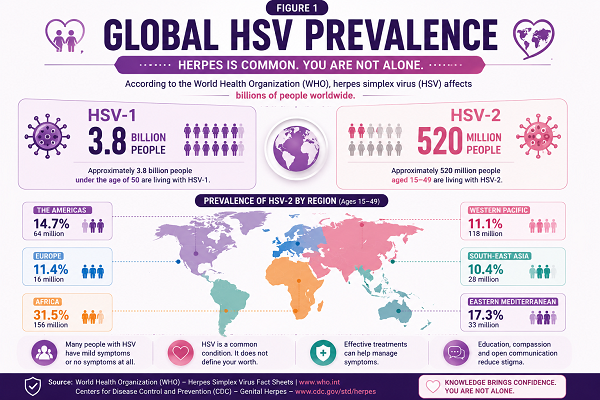
According to the World Health Organization (WHO):
- Approximately 3.8 billion people under age 50 are living with HSV-1.
- Around 520 million people aged 15–49 are living with HSV-2.
The Centers for Disease Control and Prevention (CDC) also explains that many people with herpes experience mild symptoms or no symptoms at all, meaning they may not even know they have the virus.
Unique Challenges Muslim Women May Face
Every person’s experience is different, but many Muslim women describe concerns that extend beyond the medical aspects of herpes.
Common challenges include:
Marriage Expectations
Marriage is highly valued in Islam, and many women worry that an HSV diagnosis could reduce opportunities to find a compatible spouse.
While these fears are understandable, countless individuals living with HSV build healthy, loving marriages based on honesty, compassion, and shared values.
Family Expectations
In many Muslim families, marriage is viewed as an important life milestone. Some women worry about disappointing parents or facing difficult questions about their future.
Open, respectful communication and trusted support can help navigate these conversations while preserving family relationships.
Community Stigma
Unfortunately, misinformation about sexually transmitted infections still exists.
Some people mistakenly associate herpes with personal character instead of recognizing it as a common medical condition.
Education helps replace stigma with understanding.
Privacy Concerns
Many Muslim women value discretion regarding personal health matters.
Using communities that prioritize privacy allows members to control what information they share while connecting with people who understand similar experiences.
Faith, Compassion, and Hope
Islam teaches compassion, mercy, honesty, and respect for others.
While questions about marriage, disclosure, or religious guidance should always be discussed with a trusted local scholar or qualified religious advisor, many Muslim women find comfort in remembering that illness does not diminish a person’s dignity or value.
An HSV diagnosis is a health condition—not a measure of faith or character.
Approaching future relationships with honesty and integrity reflects important Islamic values and creates the foundation for trust.
Dating While Maintaining Halal Values
Many Muslim women prefer relationships that align with Islamic principles, emphasizing respect, modesty, honesty, and serious intentions toward marriage.
Living with HSV does not prevent someone from following these values.
Many women choose to:
- Build trust before discussing personal medical information.
- Maintain appropriate boundaries.
- Communicate honestly before marriage.
- Seek relationships based on compatibility and shared faith.
- Focus on emotional connection rather than fear of rejection.
Healthy relationships begin with mutual respect, not perfection.
Expert Advice on Disclosure
Relationship experts consistently emphasize that trust and communication strengthen healthy relationships.
The American Psychological Association (APA) notes that honest communication supports emotional intimacy, while the American Sexual Health Association (ASHA) encourages people living with HSV to approach disclosure with confidence and accurate medical information.
Many counselors recommend:
- Learning the facts about HSV.
- Choosing a calm, private setting.
- Giving your future spouse time to ask questions.
- Remaining honest without shame.
- Focusing on mutual understanding rather than fear.
Rebuilding Confidence After Diagnosis
Receiving a diagnosis often affects confidence more than physical health.
Research published by the National Institutes of Health (NIH) suggests that feelings of anxiety, embarrassment, and fear of rejection commonly improve through education, counseling, and peer support.
Confidence grows gradually.
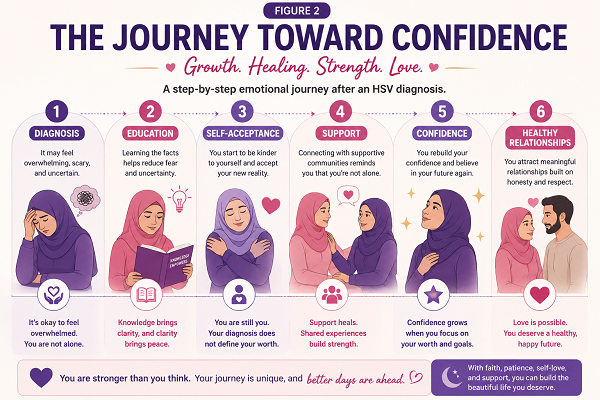
Many women describe their journey as:
Diagnosis → Education → Self-Acceptance → Support → Confidence → Healthy Relationships
Why HSV-Specific Communities Can Help
Traditional dating apps often create uncertainty about disclosure.
Communities like HSVBuddies provide a supportive environment where members already understand herpes, allowing conversations to focus on shared values, personality, compatibility, and future goals instead of fear or stigma.
Benefits include:
- Secure messaging
- Privacy controls
- Anonymous browsing
- Educational resources
- Community support
- Friendship opportunities
- Meaningful relationships
For Muslim women who value privacy, these features provide greater control over personal information while encouraging respectful communication.
Common Myths
Myth: I can’t get married if I have herpes.
Reality: Many people living with HSV have successful marriages built on trust and open communication.
Myth: My diagnosis defines me.
Reality: Herpes is a manageable health condition—not a reflection of your faith, character, or future.
Myth: No practicing Muslim would accept me.
Reality: Every individual makes personal decisions based on many factors. Many people value honesty, kindness, compatibility, and shared faith more than a medical diagnosis.
Myth: Disclosure always ends relationships.
Reality: Many couples build stronger relationships after honest conversations supported by accurate medical information.
Frequently Asked Questions
Can Muslim women with herpes get married?
Yes. Many people living with HSV build healthy, successful marriages based on trust, honesty, and mutual understanding.
Is herpes common?
Yes. According to the World Health Organization, herpes affects billions of people worldwide.
When should I disclose HSV?
Most relationship experts recommend discussing HSV before marriage or sexual intimacy, after trust has developed.
Can I use HSV dating communities while maintaining my faith?
Many Muslim women choose supportive communities to meet people who understand HSV while continuing to follow their personal religious values and relationship boundaries.
Are HSV communities private?
Yes. Reputable platforms provide privacy settings, secure messaging, and profile controls.
Can I still have children?
Many people living with HSV have healthy pregnancies and families. Discuss pregnancy planning and medical care with your healthcare provider for personalized guidance.
How can I rebuild confidence?
Education, faith, supportive relationships, counseling when needed, and connecting with people who understand your experiences often help restore confidence over time.
You’re More Than Your Diagnosis
Living with herpes doesn’t define your future.
Your faith remains strong.
Your worth is unchanged.
Meaningful, healthy relationships are still possible.
Across the world, Muslim women living with HSV are building healthy marriages, supportive friendships, and fulfilling lives while remaining true to their beliefs and values.
Whether you’re preparing for marriage, rebuilding confidence after diagnosis, or simply looking for encouragement, remember that honesty, compassion, and faith remain stronger than stigma.
Communities like HSVBuddies can provide support, friendship, and opportunities to connect with people who understand your experiences while respecting your privacy and relationship goals.
Editorial Note
This article is intended for educational purposes and should not replace personalized medical advice or religious guidance. For healthcare questions, consult a qualified medical professional. For faith-specific questions about marriage or religious practice, consult a trusted local Islamic scholar or religious advisor.