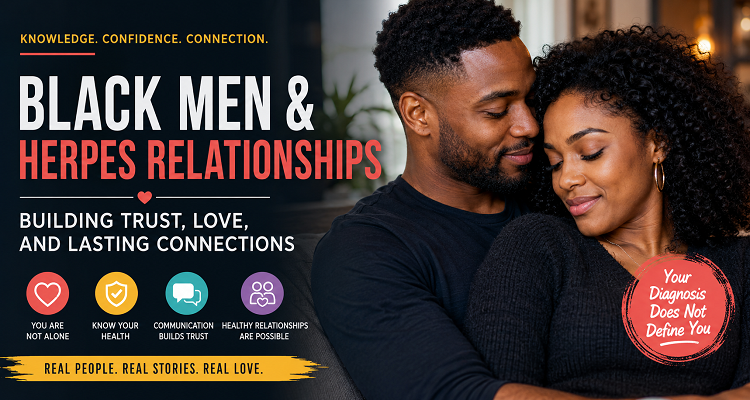
Living with herpes can raise many questions about dating, relationships, and the future. For many Black men, the emotional impact of an HSV diagnosis can feel even greater because of social stigma, cultural expectations, and concerns about disclosure.
The good news is that herpes does not prevent you from building a healthy, loving relationship. Millions of people living with HSV date, marry, and create happy families every year.
Black men herpes relationships are built on the same qualities that make every relationship successful: trust, honesty, communication, respect, and emotional connection. While herpes may require an honest conversation with a partner, it should never define your worth or limit your future.
Understanding Herpes Beyond the Stigma
Herpes simplex virus (HSV) is one of the most common viral infections worldwide.
According to the World Health Organization (WHO), approximately 3.8 billion people under age 50 are living with HSV-1 globally, while hundreds of millions have HSV-2. The Centers for Disease Control and Prevention (CDC) also reports that many people with genital herpes never develop noticeable symptoms.
These statistics show that herpes is far more common than many people realise.
Unfortunately, public perception has not kept pace with medical knowledge. Television, movies, and social media have often portrayed herpes negatively, creating unnecessary fear and embarrassment.
Healthcare professionals view herpes differently.
With antiviral medication, routine medical care, and honest communication, many people successfully manage HSV while enjoying healthy relationships.
Understanding the facts is the first step toward rebuilding confidence.
Why Dating Can Feel Different
Dating always involves vulnerability.
After an HSV diagnosis, that vulnerability may feel even greater because you are deciding when and how to discuss your health with someone new.
Many Black men describe worrying about rejection before giving another person the opportunity to understand the facts.
Those fears are common, but they often become smaller as confidence grows.
Learning more about herpes, talking with healthcare professionals, and connecting with supportive communities can make dating feel much less intimidating.
Local Dating Challenges
Privacy in Smaller Communities
Dating in a smaller town or close-knit neighborhood may create privacy concerns.
Some people worry that mutual friends, coworkers, or relatives could learn about their diagnosis if a relationship doesn’t work out.
This fear may discourage people from meeting someone locally.
Choosing trusted dating platforms and building relationships gradually can help maintain privacy while allowing genuine connections to develop.
Social Stigma
Although awareness has improved, herpes stigma still exists.
Some people incorrectly believe HSV is rare or that it reflects someone’s character.
Medical research tells a different story.
Herpes is simply a common viral infection that affects people of every race, profession, age, and background.
Education continues to be one of the most effective ways to reduce stigma.
Limited Dating Opportunities
In rural communities or smaller cities, finding someone who understands herpes may feel difficult.
The dating pool is naturally smaller, and concerns about disclosure may seem greater.
Many singles choose HSV-focused dating communities because everyone begins with a shared understanding of the condition.
This allows conversations to focus on personality, values, and relationship goals instead of fear.
Black Men Living With Herpes Have Diverse Stories
There is no single experience that represents everyone living with HSV.
Some Black men are college students beginning adult life.
Others are entrepreneurs, healthcare professionals, teachers, engineers, artists, or military veterans.
Some are divorced fathers rebuilding confidence after a long marriage.
Others are young professionals balancing careers as they explore new relationships.
The community also includes heterosexual, bisexual, and gay men, each bringing different life experiences and relationship goals.
Herpes does not discriminate based on education, income, career, or lifestyle.
Recognizing this diversity helps challenge stereotypes and reminds us that every individual deserves respect.
What Relationship Experts Recommend
Healthy relationships depend on communication rather than perfection.
Behavioral scientist and dating coach Logan Ury encourages authenticity and emotional honesty when building meaningful relationships.
Relationship researcher Dr. John Gottman has spent decades studying successful couples. His research consistently shows that trust, empathy, respect, and open communication are among the strongest predictors of long-term relationship success.
These principles are especially valuable when discussing herpes.
An honest conversation may feel uncomfortable at first, but it often builds trust rather than weakening it.
Why Accurate Information Matters
Many people fear herpes because they have never learned the medical facts.
According to the CDC, millions of Americans are living with genital herpes, and many do not know they have it because symptoms can be mild or absent.
The WHO also recognizes HSV as one of the world’s most common viral infections.
These facts remind us that herpes is a public health issue, not a measure of someone’s value.
Understanding the science makes conversations easier and helps both partners make informed decisions based on evidence instead of myths.
What Psychologists Say About Rejection
Fear of rejection is one of the biggest emotional challenges after an HSV diagnosis.
However, psychologists remind us that rejection is a normal part of dating for everyone.
People end relationships because of different personalities, different life goals, timing, family priorities, or lifestyle differences.
Herpes is only one factor among many.
Relationship researcher John Gottman emphasizes that healthy relationships are built on trust, friendship, and emotional support rather than perfection.
If someone chooses not to continue dating after disclosure, it does not reduce your value as a person.
The right relationship will be built on understanding, honesty, and mutual respect.
What Research Shows
Medical research has transformed the way healthcare providers understand herpes.
The Centers for Disease Control and Prevention reports that genital herpes is common, and many people never experience noticeable symptoms.
The World Health Organization estimates that billions of people worldwide are living with HSV-1.
Researchers supported by the National Institutes of Health continue to study improved treatments, transmission prevention, and quality of life for people living with HSV.
These findings reinforce an important message:
Herpes is a manageable medical condition, not a measure of someone’s character.
A Success Story
Marcus, a 37-year-old financial analyst, was diagnosed with HSV-2 shortly after ending a long-term relationship.
For several months, he avoided dating because he assumed every conversation would end in rejection.
After speaking with his healthcare provider and joining an HSV support community, his perspective began to change.
He learned how common herpes actually is and practiced discussing his diagnosis with confidence.
A few months later, he met someone who appreciated his honesty.
They spent time getting to know each other before discussing sexual health.
Instead of reacting with fear, she asked thoughtful questions and reviewed educational resources from trusted medical organizations.
Today, they have been together for several years.
Marcus says the hardest part of dating was not herpes itself but believing that he was no longer worthy of love.
Final Thoughts
Living with herpes may change some conversations, but it should never change how you see yourself.
Black men living with HSV continue to build healthy relationships every day.
Confidence grows through education, self-acceptance, honest communication, and supportive communities.
Remember that your diagnosis is only one small part of your story.
Your character, values, goals, and the way you treat others will always matter far more.
Love is built on trust, respect, and emotional connection, and those qualities remain within your control.
Frequently Asked Questions
Can Black men with herpes have successful relationships?
Yes. Thousands of Black men living with HSV enjoy healthy, committed relationships. Trust, communication, and mutual respect play a much bigger role than a herpes diagnosis.
When should I tell someone I have herpes?
Most healthcare professionals recommend discussing your HSV status before sexual intimacy so both partners can make informed decisions.
Will everyone reject me after disclosure?
No. While some people may decide not to continue dating, many appreciate honesty and are willing to learn the facts before making a decision.
Is herpes common?
Yes. According to the WHO and CDC, herpes is one of the most common viral infections worldwide, and many people do not realise they have it.
Can HSVBuddies help me meet people who understand herpes?
Yes. HSVBuddies connects people living with HSV in a supportive community where members can build friendships and meaningful relationships without the fear of immediate judgment.