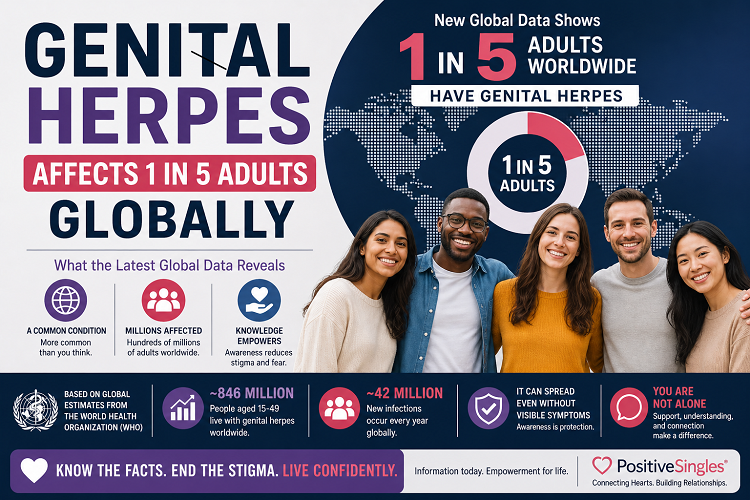
More than 1 in 5 adults worldwide are living with genital herpes, yet many people still feel isolated or ashamed because of it. This statistic, highlighted by global health data, reveals something important: herpes is far more common than most people realize.
Despite its prevalence, misinformation and stigma continue to shape how people perceive herpes. Many assume it is rare or only affects certain groups, but the reality is very different. Understanding the true scale of genital herpes can help replace fear with awareness and reduce unnecessary stigma.
This article explores what the global data means, why herpes is so widespread, and how it affects individuals beyond just physical symptoms.
Understanding the Global Prevalence of Genital Herpes
Genital herpes is one of the most common viral infections worldwide. Estimates show that hundreds of millions of people are affected globally.
Key Insights
- Around 1 in 5 adults worldwide have genital herpes
- Hundreds of millions of people are currently living with the infection
- Millions of new cases occur every year
These numbers highlight that herpes is not an exception. It is part of global public health.
Why Herpes Is More Common Than People Think
One of the main reasons herpes spreads widely is that many people do not realize they have it.
1. Asymptomatic Cases
A large number of individuals have no noticeable symptoms. This means they may carry and transmit the virus without knowing it.
2. Mild or Misinterpreted Symptoms
Some symptoms are so mild that they are mistaken for skin irritation or other minor conditions.
3. Lack of Awareness and Testing
Many people do not get tested regularly, especially if symptoms are not obvious.
How Genital Herpes Spreads
Understanding transmission is key to reducing fear and promoting responsible awareness.
Primary Transmission Method
- Skin-to-skin contact during intimate activity
Important Factors
- The virus can spread even without visible symptoms
- Risk increases during active outbreaks
- Both HSV-1 and HSV-2 can cause genital herpes
This explains why herpes can spread easily even when precautions are taken.
HSV-1 and HSV-2: What’s the Difference
Herpes simplex virus exists in two main types:
HSV-1
- Commonly associated with oral herpes
- Can also cause genital infections through oral contact
HSV-2
- Typically associated with genital herpes
- More commonly linked to recurrent outbreaks
Understanding both types helps clarify many misconceptions about herpes transmission.
The Emotional and Social Impact of Herpes
While herpes is medically manageable, its emotional impact can be significant.
Common Emotional Responses
- Anxiety about relationships
- Fear of rejection
- Feelings of embarrassment or isolation
However, these feelings are often driven by stigma rather than reality.
Shifting Perspective
- Herpes is extremely common
- Many people have healthy relationships while living with it
- Open communication reduces fear and builds trust
Why Awareness Matters More Than Ever
The global prevalence of herpes highlights the need for better education and understanding.
Benefits of Awareness
- Reduces stigma
- Encourages honest conversations
- Helps people make informed decisions
- Promotes healthier relationships
When people understand how common herpes is, it becomes easier to approach it with confidence rather than fear.
What This Means for Dating and Relationships
Knowing that herpes affects millions of people worldwide can change how you approach dating.
Key Takeaways
- You are not alone
- Many people are open to understanding
- Honest communication builds stronger connections
A diagnosis does not define your ability to build meaningful relationships.
Common Misconceptions About Herpes Prevalence
Myth: Herpes is rare
Fact: It is one of the most common infections globally
Myth: Only certain people get herpes
Fact: It affects people across all backgrounds
Myth: You would know if you had herpes
Fact: Many people do not have noticeable symptoms
Living Confidently With Herpes
Understanding the facts allows you to move forward with confidence.
Focus on What Matters
- Your overall health
- Your emotional well-being
- Your relationships and goals
Herpes does not limit your ability to live a full and meaningful life.
How to Reduce Risk and Stay Informed
Practical Steps
- Communicate openly with partners
- Stay informed about your health
- Recognize early symptoms
- Maintain a healthy lifestyle
These steps help you manage the condition responsibly.
The Bigger Picture: Reducing Stigma Globally
The more people understand herpes, the less stigma it carries.
How Change Happens
- Open conversations
- Accurate information
- Supportive communities
When awareness increases, fear decreases.
Final Thoughts
The fact that 1 in 5 adults worldwide have genital herpes changes the conversation entirely. It shifts the focus from isolation to understanding.
Herpes is not rare. It is not a reflection of character. It is a common condition that millions of people manage every day.
By understanding the facts, you can replace stigma with confidence and uncertainty with clarity. Knowledge empowers you to live fully, build meaningful relationships, and move forward without fear.
FAQ Section
How common is genital herpes worldwide?
About 1 in 5 adults globally have genital herpes.
How many people have herpes globally?
Hundreds of millions of people are affected worldwide.
Can herpes spread without symptoms?
Yes, it can spread even when no visible signs are present.
Is genital herpes serious?
It is generally manageable but can have emotional and social impact.
Call to Action
You are not alone. Millions of people are navigating the same experience every day
Join PositiveSingles and connect with individuals who understand your journey, value honesty, and are ready to build real, meaningful relationships.