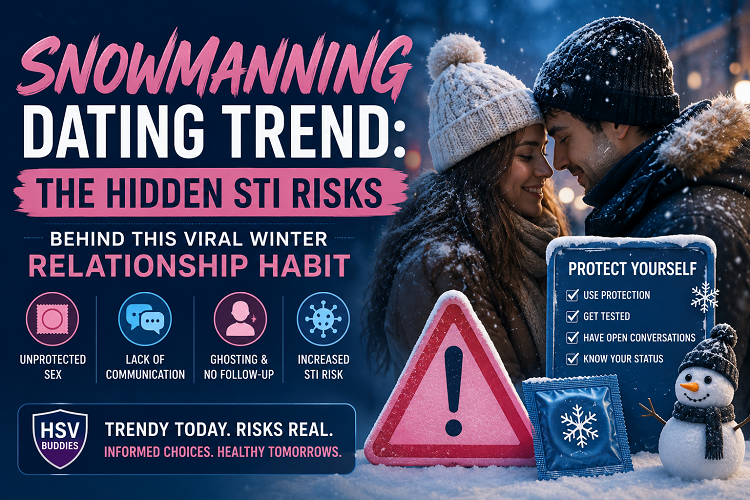
Snowmanning Dating Trend: Hidden STI Risks You Should Know
Dating trends often come and go with social media buzz, catchy names, and plenty of curiosity. Some trends are mostly harmless internet culture. Others open the door to meaningful conversations about sexual health, emotional wellbeing, and safer dating decisions.
One term that gained attention is “snowmanning.” It sounds playful, but health experts have raised questions about whether the behaviors associated with this dating trend may increase sexually transmitted infection (STI) risks.
If you have seen headlines warning about snowmanning and sexual health, you may be wondering whether this is a genuine public health concern or simply another viral dating buzzword.
Medical disclaimer: This content is for educational purposes only and does not replace professional medical advice, diagnosis, or treatment. For STI testing, symptoms, or exposure concerns, consult a licensed healthcare professional.
What Is Snowmanning?
“Snowmanning” is a modern dating slang term used to describe a short-lived romantic or sexual connection that develops during the winter or holiday season and disappears quickly afterward.
The name reflects the idea of something temporary, much like a snowman that melts when conditions change.
This type of dating pattern may involve:
- Fast emotional escalation
- Quick physical intimacy
- Holiday hookups
- Casual encounters with limited expectations
- Ghosting after intimacy
- Little long-term communication
- Spontaneous dating decisions
Snowmanning is not a medical diagnosis or officially recognized health term.
It is simply a dating culture label.
However, the behaviors sometimes associated with these short-term encounters are what raise sexual health concerns.
Why Snowmanning Became a Sexual Health Topic
Health professionals are not concerned about the term itself.
The concern is about behaviors that may accompany impulsive or short-term dating encounters.
These may include:
- Condomless sex
- Limited discussion about STI history
- Alcohol-impaired decision-making
- Multiple short-term partners
- Lack of partner follow-up
- Delayed STI testing
- Emotional pressure or unclear expectations
Public health research consistently shows that certain sexual behaviors increase STI transmission risk.
The issue is not winter dating.
The issue is unsafe sexual decision-making.
How Casual Dating Can Increase STI Risk
Casual dating itself is not inherently unhealthy or irresponsible.
Many adults navigate casual relationships safely through communication, consent, testing, and protection.
Risk increases when protective behaviors are absent.
Situations that may increase exposure include:
Limited STI Conversations
When intimacy happens quickly, important discussions may be skipped.
Topics often overlooked include:
- Recent STI testing
- Current symptoms
- Condom preferences
- Relationship exclusivity
- Past exposure concerns
Silence creates uncertainty.
Multiple Partners in Short Timeframes
If someone has several short-term partners over a short period, transmission opportunities naturally increase.
This applies regardless of whether the encounters are part of a “trend.”
Risk depends on behavior patterns, not trendy labels.
Inconsistent Protection
Barrier protection significantly reduces STI risk, but many impulsive encounters occur without preparation.
Examples include:
- No condoms available
- Alcohol-related judgment impairment
- Assumptions about partner health
- “It’s just one time” thinking
Even one unprotected encounter can create exposure risk.
STI Risks Associated With Casual Hookup Patterns
The possible infections associated with unprotected or poorly planned encounters include both viral and bacterial STIs.
Herpes (HSV-1 and HSV-2)
Herpes remains one of the most misunderstood sexually transmitted infections.
Transmission can happen through:
- Vaginal sex
- Oral sex
- Anal sex
- Skin-to-skin intimate contact
Important facts:
- Herpes can spread even without visible sores
- Many people do not know they carry HSV
- Condoms reduce risk but do not eliminate it
- Oral HSV-1 can be transmitted to the genital area
Because herpes often spreads from asymptomatic individuals, casual hookups without communication may increase exposure risk.
Chlamydia
Chlamydia is one of the most common bacterial STIs worldwide.
It often causes no symptoms, which means people may unknowingly pass it to partners.
Untreated chlamydia can lead to:
- Pelvic inflammatory disease
- Fertility complications
- Chronic pelvic pain
- Infection spread
Routine testing matters because symptom-free infections are common.
Gonorrhea
Gonorrhea can affect:
- Genitals
- Rectum
- Throat
Like chlamydia, some infections cause few or no obvious symptoms.
Drug-resistant gonorrhea has also become a growing public health concern.
Syphilis
Syphilis spreads through direct contact with infectious sores.
Early symptoms may be subtle and easy to miss.
Without treatment, syphilis can lead to serious complications.
HIV
Certain types of unprotected sex can increase HIV exposure risk.
Risk varies depending on:
- Exposure type
- Prevention strategies
- Partner status
- Condom use
- Pre-exposure prophylaxis (PrEP) use
HIV prevention conversations remain an important part of modern sexual health.
Read more: Genital Herpes Affects 1 in 5 Adults Globally: What This Means for You
The Hidden Risk of Ghosting After Intimacy
One of the less discussed public health concerns linked to short-term hookup culture is communication breakdown.
If someone disappears after sex:
- Partner notification becomes harder
- Follow-up testing conversations may never happen
- Symptoms may go unreported
- Exposure awareness becomes delayed
- STI contact tracing becomes more difficult
Communication is a public health issue—not just a relationship issue.
Responsible dating includes accessibility and accountability.
Emotional Health Risks Matter Too
Not every dating risk is physical.
Short-term intense romantic experiences followed by abrupt disappearance can also affect emotional wellbeing.
Possible emotional consequences include:
- Anxiety
- Rejection stress
- Dating burnout
- Emotional confusion
- Lower self-confidence
- Trust issues
- Loneliness
Casual dating does not automatically cause emotional harm.
The key issue is expectation mismatch.
If one person expects connection while the other expects temporary intimacy, emotional distress becomes more likely.
Healthy dating includes emotional clarity.
Alcohol, Parties, and Holiday Decision-Making
Snowmanning discussions often overlap with winter social environments such as:
- Holiday parties
- Vacation travel
- New Year celebrations
- Seasonal loneliness
- Alcohol-heavy social events
Alcohol can reduce sexual risk awareness.
This may contribute to:
- Lower condom use
- Poor communication
- Reduced boundary enforcement
- Impulsive intimacy
- Forgotten protection planning
This does not mean social dating is unsafe.
It means context influences decision-making.
How to Reduce STI Risk While Dating
Dating confidently does not require fear.
It requires informed choices.
1. Use Protection
Barrier methods help reduce STI transmission risk.
Examples include:
- External condoms
- Internal condoms
- Dental dams
No prevention method offers perfect protection, but risk reduction matters.
2. Have Direct Sexual Health Conversations
Before intimacy, discuss:
- Recent STI testing
- Symptoms
- Exposure history
- Condom preferences
- Protection expectations
These conversations may feel awkward.
Untreated infections are worse.
3. Avoid Judging Risk by Appearance
Someone looking healthy does not mean they are infection-free.
Many STIs are asymptomatic.
Visual assumptions are unreliable.
4. Test Regularly
Testing frequency depends on sexual activity and exposure risk.
Testing may be especially appropriate after:
- New sexual partners
- Unprotected encounters
- Condom breakage
- Symptoms
- Multiple casual hookups
5. Know Your Boundaries Before Social Events
Planning ahead helps reduce impulsive decisions.
Ask yourself:
- What are my boundaries?
- Do I have protection available?
- Am I comfortable discussing STI history?
- What do I actually want from this interaction?
Clarity improves safety.
Herpes and Casual Dating
For people living with herpes, dating trends like snowmanning may create additional concerns.
Common worries include:
- Disclosure anxiety
- Fear of rejection
- Transmission concerns
- Misunderstanding from partners
- Emotional stress
Important perspective:
Having herpes does not prevent healthy dating.
Responsible intimacy includes:
- Honest communication
- Informed consent
- Mutual respect
- Reasonable risk reduction
- Emotional maturity
Casual dating can still be navigated responsibly.
What Current Evidence Actually Says
Here is the most evidence-based perspective.
What We Know
- Casual unprotected sex can increase STI exposure risk
- Many STIs spread without obvious symptoms
- Alcohol may increase risky sexual decision-making
- Lack of communication complicates follow-up care
- Barrier protection reduces risk
What We Do Not Know
- Whether snowmanning represents a measurable long-term public health trend
- How widespread the behavior actually is
- Whether the viral term reflects stable dating patterns
Trend names change quickly.
Sexual health principles remain consistent.
Frequently Asked Questions
Is snowmanning a real medical term?
No.
Snowmanning is dating slang, not a medical diagnosis.
Does snowmanning automatically mean STI risk?
No.
Risk depends on behaviors such as unprotected sex, multiple partners, and poor communication.
Can herpes spread during casual hookups?
Yes.
Herpes can spread through intimate skin-to-skin contact, including when symptoms are not visible.
Should I get tested after a hookup?
Testing may be appropriate depending on exposure type, symptoms, and partner circumstances.
A healthcare provider can advise on appropriate timing.
Is ghosting after sex a health concern?
Potentially.
Loss of communication can make exposure discussions and partner notification more difficult.
Our Editorial Standards
At HSVBuddies, sexual health content follows evidence-based editorial principles.
We prioritize:
- Medical accuracy
- Practical health education
- Stigma-free communication
- Clear distinction between internet trends and clinical facts
- Compassionate reader-centered guidance
Final Verdict
So, is the snowmanning dating trend dangerous?
The most accurate answer is:
Snowmanning itself is simply a dating culture label. However, behaviors sometimes associated with short-term impulsive hookups—such as unprotected sex, inconsistent testing, alcohol-impaired decision-making, and poor communication—can increase STI risk.
The real sexual health lesson is not about trendy dating terminology.
It is about informed, respectful, safer dating choices.