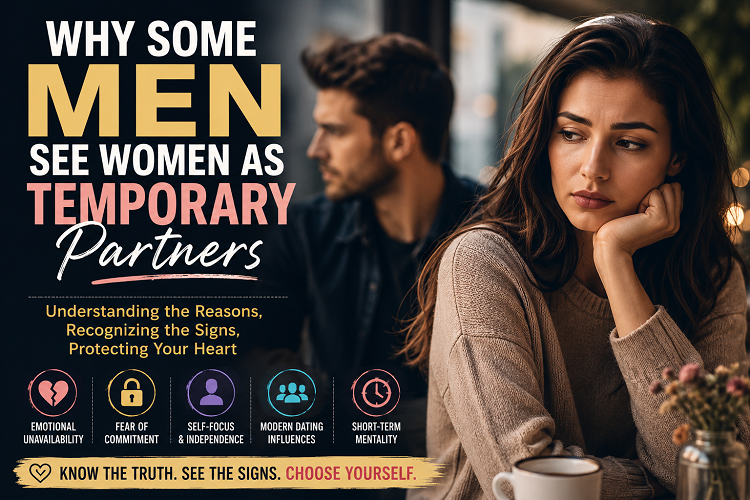
Modern dating can feel confusing, especially when emotional intentions are unclear. Many women enter relationships hoping for commitment, emotional security, and long-term connection, only to discover that the other person viewed the relationship as temporary from the beginning.
This experience can create frustration, heartbreak, self-doubt, and emotional exhaustion. While not every man approaches dating the same way, psychology experts and relationship researchers recognize several emotional, social, and behavioral factors that may influence why some men avoid long-term commitment or treat relationships casually.
Understanding these patterns can help people make healthier dating choices, recognize emotional warning signs earlier, and build stronger relationships based on honesty and mutual respect.
According to the American Psychological Association, relationship expectations, attachment styles, communication patterns, and emotional maturity all play important roles in romantic behavior. Research available through PubMed also connects emotional availability and commitment readiness with relationship stability and satisfaction.
Temporary Relationships vs. Long-Term Intentions
Not every relationship begins with the same expectations.
Some people date casually for companionship, attraction, or short-term enjoyment, while others prioritize emotional connection and long-term partnership.
Problems often develop when intentions are unclear or dishonest.
A person who views dating casually may:
- Avoid future planning
- Resist emotional vulnerability
- Keep communication inconsistent
- Avoid labels or commitment conversations
- Prioritize convenience over emotional investment
Meanwhile, the other partner may interpret attention, affection, or chemistry as signs of deeper commitment.
Misaligned expectations often create emotional pain.
Why Some Men Avoid Long-Term Commitment
There is no single explanation for commitment avoidance. Relationship behavior is influenced by personality, emotional maturity, life experiences, mental wellbeing, social conditioning, and relationship history.
However, experts commonly identify several contributing factors.
1. Fear of Emotional Vulnerability
Emotional vulnerability requires openness, honesty, and emotional risk.
Some men struggle with vulnerability because of:
- Fear of rejection
- Past heartbreak
- Childhood emotional conditioning
- Trust issues
- Difficulty expressing emotions
In some cultures, men are taught to suppress emotional openness or avoid appearing emotionally dependent. Over time, this can make deeper emotional intimacy uncomfortable.
The National Institute of Mental Health emphasizes that emotional awareness and communication are important parts of healthy emotional functioning and relationships.
Men who fear vulnerability may keep relationships emotionally shallow to maintain a sense of control or emotional distance.
2. Desire for Freedom and Independence
Some individuals associate long-term commitment with loss of independence.
They may fear:
- Reduced personal freedom
- Lifestyle changes
- Responsibility
- Emotional dependence
- Long-term expectations
This does not necessarily mean they dislike relationships. Instead, they may prefer low-pressure connections that feel emotionally manageable.
In these situations, relationships may remain temporary because commitment feels overwhelming rather than desirable.
3. Emotional Immaturity
Emotional maturity strongly affects relationship behavior.
Emotionally immature partners may:
- Avoid difficult conversations
- Prioritize short-term pleasure
- Struggle with accountability
- Avoid emotional responsibility
- Send mixed signals
- Disappear during conflict
Healthy relationships require consistency, empathy, communication, and mutual effort. Without emotional maturity, maintaining long-term partnership becomes difficult.
4. Influence of Modern Dating Culture
Dating apps and social media have changed relationship dynamics significantly.
Constant access to new matches and online attention may encourage:
- Fear of missing out
- Endless comparison
- Superficial connections
- Reduced emotional investment
- Shorter dating cycles
Some people begin viewing relationships as replaceable instead of meaningful emotional partnerships.
This mindset can contribute to temporary relationship behavior.
5. Fear of Failure or Divorce
Past experiences influence future relationships.
Men who witnessed:
- Toxic relationships
- Painful divorces
- Family instability
- Betrayal
- Emotional conflict
may become cautious about long-term emotional commitment.
Fear of repeating painful experiences can create emotional avoidance.
In some cases, temporary relationships feel emotionally safer than risking serious attachment.
6. Lack of Relationship Readiness
Sometimes the issue is timing rather than intention.
A person may not feel emotionally or mentally prepared for long-term partnership because of:
- Career pressure
- Financial instability
- Personal goals
- Mental health challenges
- Unresolved emotional healing
Someone can genuinely enjoy another person while still lacking readiness for serious commitment.
Unfortunately, unclear communication about this often creates misunderstanding.
Signs Someone May View a Relationship as Temporary
Recognizing patterns early may help prevent emotional confusion.
Common signs may include:
Inconsistent Communication
Frequent emotional distance, disappearing behavior, or unpredictable attention patterns.
Avoiding Future Conversations
Refusing to discuss long-term plans, exclusivity, or relationship direction.
Minimal Emotional Vulnerability
Sharing very little emotionally while keeping conversations surface-level.
Prioritizing Convenience
Only engaging when it benefits them emotionally, physically, or socially.
Resistance to Commitment Labels
Avoiding terms like relationship, partner, or commitment despite ongoing intimacy.
Limited Integration Into Their Life
Keeping the relationship separated from family, close friends, or long-term life plans.
While these signs do not guarantee bad intentions, repeated patterns often reveal emotional availability levels.
Why Women Often Feel Hurt in These Situations
Emotional attachment naturally creates expectations.
When affection, communication, and intimacy increase, many people assume the relationship is growing emotionally deeper.
If one partner secretly views the relationship as temporary, the emotional imbalance can create:
- Confusion
- Anxiety
- Self-doubt
- Trust concerns
- Emotional burnout
- Fear of future relationships
The emotional pain often comes less from casual dating itself and more from unclear intentions or emotional inconsistency.
The Importance of Honest Communication
Healthy relationships depend on clarity and honesty.
The Centers for Disease Control and Prevention (CDC) emphasizes communication, mutual understanding, and informed decision-making as important parts of healthy relationships and emotional wellbeing.
Important conversations may include:
- Relationship expectations
- Emotional availability
- Exclusivity
- Long-term goals
- Communication preferences
- Emotional boundaries
Clear conversations reduce misunderstandings and emotional assumptions.
How to Protect Emotional Wellbeing While Dating
Pay Attention to Consistency
Consistency often reveals emotional seriousness more clearly than words alone.
Observe:
- Effort
- Reliability
- Emotional presence
- Communication habits
- Follow-through
Believe Patterns, Not Potential
Many people stay emotionally invested in who someone could become instead of who they currently are.
Healthy relationships require present effort, not imagined future change.
Avoid Ignoring Red Flags
Common warning signs include:
- Mixed signals
- Emotional unavailability
- Dishonesty
- Lack of accountability
- Repeated inconsistency
Early awareness matters.
Maintain Personal Boundaries
Healthy boundaries support emotional wellbeing.
Boundaries may include:
- Communicating expectations
- Protecting emotional energy
- Avoiding emotionally one-sided dynamics
- Leaving unhealthy situations earlier
Prioritize Mutual Emotional Investment
Healthy relationships involve effort from both people.
Long-term connection usually requires:
- Respect
- Emotional honesty
- Reliability
- Communication
- Shared intentions
Not All Men View Relationships as Temporary
It is important to avoid generalizations.
Many men value emotional intimacy, long-term commitment, loyalty, and healthy partnership. Relationship readiness varies from person to person regardless of gender.
Healthy relationships are built through:
- Emotional maturity
- Honest communication
- Shared values
- Mutual respect
- Consistent effort
The key is recognizing compatibility and emotional alignment early.
Frequently Asked Questions
Why do some men avoid serious relationships?
Some men may avoid serious commitment because of emotional fear, past heartbreak, lack of readiness, fear of vulnerability, or lifestyle priorities.
Can someone genuinely care while avoiding commitment?
Yes. A person may care emotionally while still feeling unprepared for long-term partnership or emotional responsibility.
What are common signs of a temporary relationship?
Common signs include inconsistent communication, avoiding future planning, emotional distance, lack of commitment conversations, and prioritizing convenience.
How can someone identify emotional unavailability?
Emotional unavailability may appear through limited vulnerability, inconsistent affection, avoidance of serious conversations, or difficulty expressing emotions.
Why do unclear relationship intentions create emotional pain?
Unclear intentions can create emotional imbalance, confusion, false expectations, and feelings of rejection when relationship goals are not shared openly.
Can emotionally unavailable people change?
Personal growth is possible when someone develops self-awareness, emotional maturity, communication skills, and willingness to address unhealthy patterns.
How can women protect emotional wellbeing while dating?
Maintaining boundaries, paying attention to consistency, communicating expectations clearly, and recognizing red flags early may help support healthier dating experiences.
Are casual relationships always unhealthy?
No. Casual relationships can be healthy when both people communicate honestly and share similar expectations.
Final Thoughts
Not every relationship is built for permanence.
Some people enter relationships ready for emotional depth and long-term connection. Others may still be navigating emotional fears, uncertainty, or personal growth.
Understanding why some men view women as temporary partners can help reduce confusion and encourage healthier relationship decisions.
The healthiest relationships are usually built on:
- Honesty
- Emotional maturity
- Mutual respect
- Communication
- Shared intentions
When emotional goals align, relationships often become more stable, supportive, and meaningful.
Disclaimer
This article is for educational purposes only and does not replace professional mental health, relationship counseling, or medical advice.