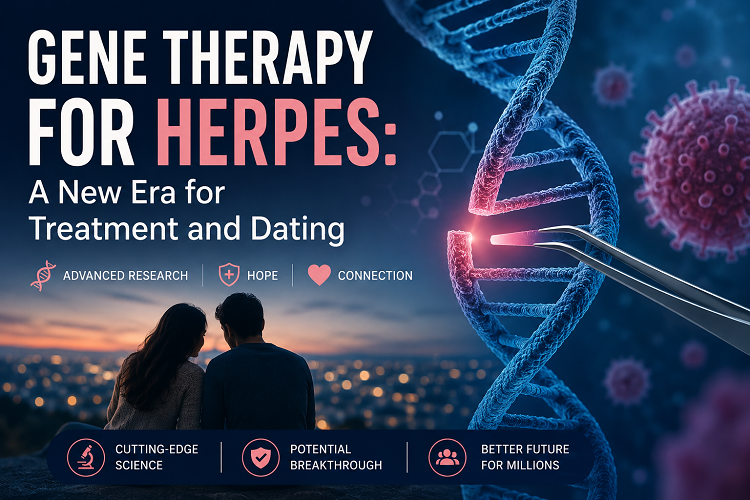
For decades, herpes simplex virus (HSV) treatment has focused on management rather than elimination. Antiviral medications can reduce outbreaks, shorten symptom duration, and lower transmission risk, but they do not remove the virus from the body. For millions of people living with HSV, that reality affects more than physical health—it can also shape confidence, emotional well-being, and dating experiences.
Now, gene therapy has become one of the most closely watched areas in herpes research. Scientists are investigating whether advanced gene-editing technologies could eventually target HSV more directly, potentially changing how the virus is treated in the future.
Although gene therapy for herpes remains experimental and is not available as a standard clinical treatment, the science has sparked significant hope. For many, the bigger question is not only whether treatment may improve, but what that could mean for relationships, stigma, and dating confidence.
Why Herpes Is Difficult to Cure
Herpes simplex virus behaves differently from many viral infections.
After entering the body, HSV can move into nerve cells and establish latency, meaning it becomes dormant for long periods. During this time, the virus is difficult for both the immune system and current antiviral medications to eliminate.
According to the Centers for Disease Control and Prevention (CDC), herpes infections are extremely common, and many individuals may have mild symptoms or no symptoms at all while still carrying the virus.
Current treatment options such as:
- Acyclovir
- Valacyclovir
- Famciclovir
can help:
- Reduce outbreak frequency
- Shorten healing time
- Lower asymptomatic viral shedding
- Reduce transmission risk
However, these treatments suppress viral activity rather than removing HSV from nerve tissue.
That distinction explains why cure research remains such an important focus.
What Is Gene Therapy for Herpes?
Gene therapy refers to advanced medical techniques that aim to modify or target genetic material to treat disease.
In herpes research, scientists are exploring whether gene-editing technologies could locate latent HSV DNA hiding in nerve cells and disable or destroy it.
This represents a fundamentally different approach from standard antiviral medications.
Traditional antivirals slow viral replication.
Gene-editing strategies aim to directly target the virus at its source.
That possibility has made herpes gene therapy one of the most discussed topics in STI research.
Still, it’s important to be medically accurate:
There is currently no approved gene therapy treatment or cure for herpes available to the public.
Current Research in Herpes Gene Therapy
Several promising scientific approaches are being studied.
Meganuclease Gene Editing
One of the most notable areas of HSV cure research involves engineered enzymes known as meganucleases.
These specialized molecular tools are designed to recognize highly specific HSV DNA sequences and cut them.
Researchers at Fred Hutch Cancer Center have published encouraging preclinical findings showing substantial reductions in latent HSV levels in animal studies.
Why this matters:
HSV’s greatest challenge is its ability to hide in nerve tissue.
If gene-editing therapies can effectively reduce latent viral reservoirs, this could represent a major shift in herpes treatment science.
However, animal research does not automatically translate into safe or effective human treatment.
Human clinical application remains under investigation.
CRISPR and Herpes Research
CRISPR has become one of the most widely recognized gene-editing technologies.
Scientists are exploring whether CRISPR-based approaches could:
- Identify HSV genetic material
- Disable viral DNA
- Reduce latent infection burden
The concept is scientifically exciting.
But there are major technical barriers.
Challenges include:
- Safe delivery into nerve tissue
- Preventing unintended edits
- Long-term safety monitoring
- Immune system responses
At present, CRISPR for herpes remains experimental research rather than a clinical treatment option.
Delivery Technology Challenges
Even if gene-editing tools work in theory, delivery remains one of the biggest hurdles.
HSV hides deep within nerve ganglia.
Reaching those cells safely is extremely complex.
Researchers are investigating viral vectors and other delivery methods capable of transporting therapeutic gene-editing tools into infected tissues.
Without reliable delivery systems, promising science cannot become practical medicine.
What Trusted Health Authorities Say
Responsible health content requires balanced expectations.
According to established public health organizations:
- The CDC recognizes antiviral suppression as the current standard of care
- The World Health Organization (WHO) reports that HSV infections affect billions globally
- No approved herpes cure currently exists
- No gene-editing HSV treatment is commercially available
This matters because media headlines can sometimes exaggerate early-stage findings.
A “breakthrough” in laboratory research does not mean a treatment is close to market.
Scientific development requires years of safety validation.
Emotional Impact of Living With Herpes
Medical management is only part of the conversation.
For many people, herpes affects emotional health just as much as physical symptoms.
Common experiences include:
- Fear of rejection
- Disclosure anxiety
- Dating hesitation
- Shame linked to social stigma
- Lower intimacy confidence
- Relationship uncertainty
Many individuals report that the emotional burden comes less from the virus itself and more from anticipated judgment.
That stigma can make dating feel far more difficult than necessary.
Could Gene Therapy Change Dating?
Even though gene therapy is not available today, research progress can still influence how people emotionally view the future.
More Hope, Less Helplessness
A herpes diagnosis can initially feel permanent and emotionally overwhelming.
Knowing researchers are actively pursuing better treatment options may help reduce feelings of hopelessness.
Hope can improve confidence—even before treatments arrive.
Reduced Public Stigma
Medical innovation often changes cultural narratives.
As herpes research becomes more visible, conversations may gradually shift from shame-based assumptions toward evidence-based understanding.
That kind of public awareness could make disclosure less intimidating over time.
Better Confidence Through Knowledge
Confidence often improves when uncertainty decreases.
Understanding current treatment options, transmission realities, and emerging research can help people approach dating with greater clarity rather than fear.
What Gene Therapy Won’t Fix
Medical breakthroughs can change biology.
They do not automatically heal emotional wounds.
Even if future gene therapy becomes successful, it may not instantly erase:
- Internalized shame
- Fear of vulnerability
- Anxiety around disclosure
- Past rejection experiences
- Relationship insecurity
Emotional healing remains personal work.
Self-worth should never depend entirely on future medical advances.
Dating With Herpes Today
While research continues, meaningful relationships remain completely possible now.
Many people living with HSV build healthy romantic lives through education, communication, and perspective.
Learn Accurate Information
Understanding how herpes actually works helps reduce fear.
Reliable information about:
- Transmission
- Suppressive therapy
- Symptom management
- Safer intimacy practices
can make dating conversations feel more manageable.
Practice Honest Disclosure
Disclosure often feels scarier in anticipation than in reality.
A calm, respectful conversation often works best.
Example:
“I want to share something important because I respect where this connection is going. I have herpes, I manage it responsibly, and I’m happy to answer questions if you’d like.”
Simple honesty often creates stronger trust than fear-driven overexplaining.
Separate Diagnosis From Identity
Herpes is a medical condition.
It does not define:
- Character
- Emotional maturity
- Relationship worth
- Desirability
- Future compatibility
Rejecting stigma is a major part of emotional healing.
Find Supportive Communities
Many people benefit from connecting with others who understand the emotional side of living with HSV.
Supportive communities can help normalize:
- Disclosure stress
- Dating anxiety
- Emotional adjustment
- Relationship questions
Feeling understood reduces isolation.
Managing Expectations About “Cure” Headlines
Not every exciting headline reflects clinical reality.
When evaluating herpes cure claims, ask:
- Was the study conducted in animals or humans?
- Has it entered clinical trials?
- Was the research peer-reviewed?
- Are safety risks discussed?
- Do trusted health organizations support the claims?
Hope matters.
Accuracy matters more.
Frequently Asked Questions (FAQ)
Is gene therapy for herpes available right now?
No. Gene therapy for herpes remains experimental and is not approved as a routine clinical treatment. Current HSV care relies on antiviral medications and risk-reduction strategies.
Can gene therapy cure herpes?
Researchers are investigating whether gene-editing technologies could potentially reduce or eliminate latent HSV reservoirs, but no approved cure currently exists.
What treatments are currently available for herpes?
Standard treatment includes antiviral medications such as:
- Acyclovir
- Valacyclovir
- Famciclovir
These help manage symptoms and reduce transmission risk but do not eliminate HSV.
Is CRISPR being used to treat herpes?
CRISPR is being studied in research settings as a possible herpes treatment approach, but no approved CRISPR-based HSV therapy exists today.
What is meganuclease therapy?
Meganuclease therapy involves engineered enzymes designed to recognize and cut specific viral DNA sequences. It remains experimental.
Can people with herpes still have successful relationships?
Yes. Many individuals living with herpes build healthy, loving relationships through honest communication, education, and responsible management.
Can herpes spread without symptoms?
Yes. HSV can be transmitted through asymptomatic viral shedding, which is why awareness and preventive strategies are important.
Should I wait for a cure before dating?
No. Meaningful relationships are possible now. Future treatments may improve care, but your dating life does not need to remain on hold.
Final Thoughts
Gene therapy for herpes represents one of the most promising frontiers in HSV research.
But promise is not the same as availability.
Right now, evidence-based herpes care still relies on antiviral treatment, informed healthcare guidance, and safer intimacy practices.
At the same time, emerging research offers realistic hope.
For people navigating herpes and dating, that matters.
Medical progress may improve future treatment options.
But confidence, connection, and meaningful relationships remain possible today.
About the Author
This article was written by a sexual health and relationship content specialist focused on STI education, emotional wellness, and relationship communication. Medical content should always be reviewed by qualified healthcare professionals.
Medical Disclaimer
This content is for informational purposes only and does not constitute medical advice, diagnosis, or treatment. Always consult a licensed healthcare professional regarding symptoms, treatment decisions, or emerging HSV therapies.